Ori-oke Sekimondo: A Reflection on Place and Prayer

Updated: Feb 25
In this reflective essay set between Sekimondo and memory, Wisdom Ebai, a Nigerian Yoruba writer based in Kigali, Rwanda, reconsiders the idea of ori-oke, sacred prayer hills in his upbringing associated with urgency and spiritual breakthrough. Observing daily life on a Rwandan hillside that resists symbolic meaning, he traces a steady arc from inherited belief to present-day noticing. Through prayer, naming, and landscape, the writer, whose broader work explores memory and imagination in everyday culture, asks how migration reshapes what faith once required.
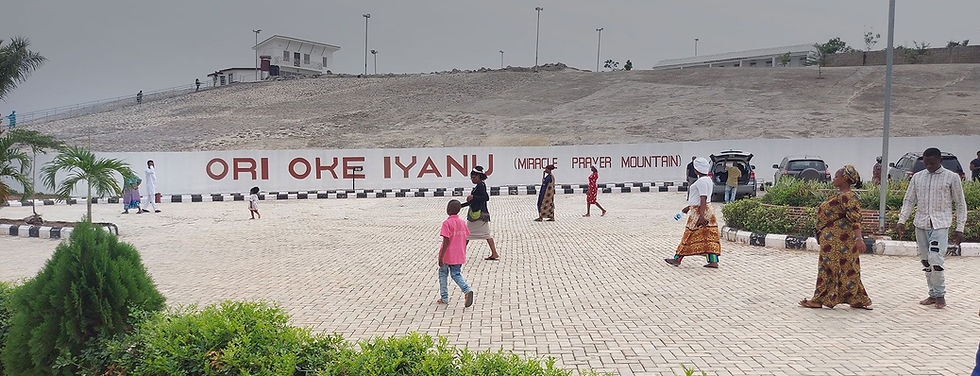
I arrived in Kigali carrying an unspoken assumption about hills. Over time, I had learned that height usually meant something…sacred, set apart, intentional. So when I began living in Sekimondo, surrounded by slopes and rising ground, I waited for that meaning to manifest. I waited for the familiar sounds I knew from home. But the place sat still. People walked by minding their business, homes stood quietly, and life just continued, honestly, without drama.
Back home, you climbed when you needed to speak to God about something serious. No one wrote this rule anywhere, but everyone understood it. Elevation felt practical, almost like improving your cellphone’s network reception (or maybe that was where they got it from). The higher you went, the clearer the connection seemed. When a matter became urgent, staying on level ground felt like an insult to the weight of it. So you climbed because some prayers were too important to whisper from where you stood.
Sekimondo challenged that instinct. I was already on a hill, already high up, already standing on ground that would have served as a prayer altar anywhere back home. Yet nothing here suggested urgency. I am sure people prayed, but they did so indoors, calmly, without the rituals I was used to. God, it seemed, did not require altitude to listen.
One morning, the contrast found me on its own. Through my window I could hear my neighbour, her voice low and familiar, the same as the morning before, and the one before that. It was her routine, the way making tea is routine, or laying the bed. She was simply dedicating her day before it began, handing it over. Just a voice, the early light, and a habit she clearly had no intention of breaking. Climbing a mountain to speak to God had always made sense to me, it felt like effort, like showing up. But there was effort in her consistency too, in the quiet discipline of it. Both assume that God listens. They just imagine the listening differently.
I grew up around mountains that were never left without meaning. There is ori-oke adura for prayers, isoji for deliverance, ori-oke ìṣẹ́gun for breakthrough, ori-oke àánú for mercy. Each name holds expectation and something close to personality. You know I've always wondered who decides these things. What kind of prayer must have been answered or maybe refused before a name finally stuck?
The name Ori-oke Sekimondo came to me as a joke. I was on a call with my mother, showing her the view from one of my many evening walks, and I laughed and said that if this were back home, the spot would already have a name. Someone would have claimed it, marked it, and explained exactly what it was good for.
So for a little while, I called it Ori-oke Sekimondo just to acknowledge the habit I carry: the tendency to assign meaning to elevation, to feel that height wants a purpose. Sekimondo remains what it is, a place where people live. A simple hill that does not ask to be renamed. And it feels complete without the extras.
Still, I can't help but wonder, how many hills back home might secretly want to live as quietly as this one I know?


Comments